PencilJazz Home Design Plans

Category: Home Design Journal

  • Laminated Structural Timber

    Laminated Structural Timber

    Veneer Lumber
    Veneer Lumber
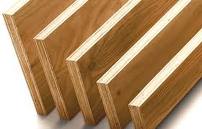
    Laminated Structural Timber, also called Laminated Veneer Lumber (LVL), and even called Microlaminated Lumber, is composed of layers of wood joined with glue. It is usually stronger than the same dimension of solid lumber. It costs a little more per board foot, but you tend to need smaller members, and it tends to be very straight and consistent over the entire length of the board. It can be exposed and finished just like solid wood, even with a stain, and it looks nice. A large beam of solid wood would actually cost a lot more than LVL because it comes from a large tree which, these days, is rare. If you are building a post and beam structure, it is a pleasure to work with, again, because it is seldom warped or marred and drills and cuts clean with a sharp bit or blade. The glue does tend to dull blades rather early, but its worth it. It is not always a better choice than steel or a truss joist system, or even a chorded truss. But it is used a lot by an architect for beams and headers.

    http://www.ilevel.com/default.aspx

    Structural Laminate 2
    Structural Laminate 2
     
    Structural Laminate 1
    Structural Laminate 1

  • Hardwood Style Exterior Decking

    Hardwood Style Exterior Decking

    Siesta Hardwood Decking
    Siesta Hardwood Decking
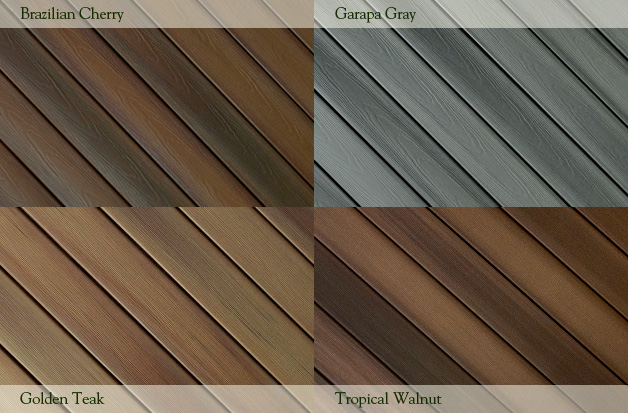
    I have watch all kinds of wood decking over the years. They all require regular laborious maintenence. New products are on the market that overcome that burden with substantial longevity, and they look great. Composite decking is partly wood and partly synthetic. You may have to drill starter holes for the nails. Maybe even use screws to fasten them down. I encourage you to consider something like this material.

    Hardwood Style Exterior Decking

  • Interior Hardwood Flooring Galleries

    Interior Hardwood Flooring Galleries

    Walnut Flooring
    Walnut Flooring
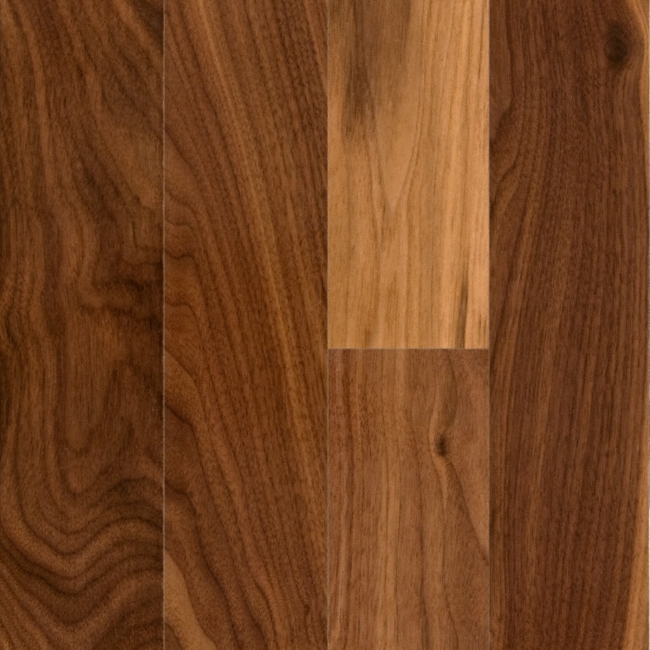
    Of course you would like to see all the choices available for beautiful floorings you might install in your new house. If you can open a website, you can have a lot of fun shopping for flooring. I have made the effort to provide you with some links to nice flooring galleries of recommendable manfucturers. Enjoy!

    http://www.armstrong.com/

    http://www.bellawood.com

    http://www.lumberliquidators.com

    http://www.heartwoodpine.com/

    http://www.heartpine.com

  • Termite Shields for Ants Too

    Termite Shields for Ants Too

    Termite Shield
    Termite Shield
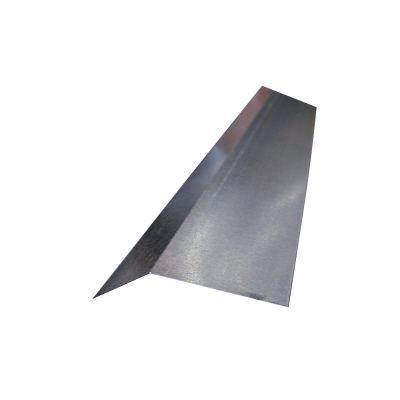
    Ants or termites will find a way to get into your walls and eat the studs, especially if moisture occurs. You have only two options: 1. apply pesticide every year around your perimeter or – 2. install a zinc flashing under the sill planks, on top of the foundation wall, with a 1-1/2 inch lip draping over the wall at a 45 degree angle.

    A few companies manufacture them preformed, but you can fashion one from a role of zinc flashing. Don’t use aluminium or copper or some galvanized metal. They will react to the pressure treated wood and concrete and break down chemically.

    This is the green thing to do. The ants are not harmed, the ground is not poisoned, but they can’t get in and you only do it once. If your house is preserved from destruction, you are conserving natural resources. That is green. Write me if you want to see a graphic detail of this shield in a wall. If you build to last, you save on material resources.

    I will admit, it is curiously difficult to find a building materials supplier in Maine who has any idea what a Termit Shield looks like, or a builder who ever installs them. Mainers are under the impression that they are unecessary due to the impression that termites seldom appear in Maine. However, we already have a severe problem in Maine with ants infesting homes and eating the wood frame of the house. What is traditionally called a “termite shield” will also work for ants. If you do not install one in your house, you are making a serious mistake. I found two companies online who supply termite shields. Print them and bring them to your builder or supplier and tell them you want these on your home. They are installed by laying them along the top of the foundation wall, under the sills. Here are links to their PDF brochures.
  • Stair Case Design Elements

    Stair Case Design Elements

    Stair Styles
    Stair Styles

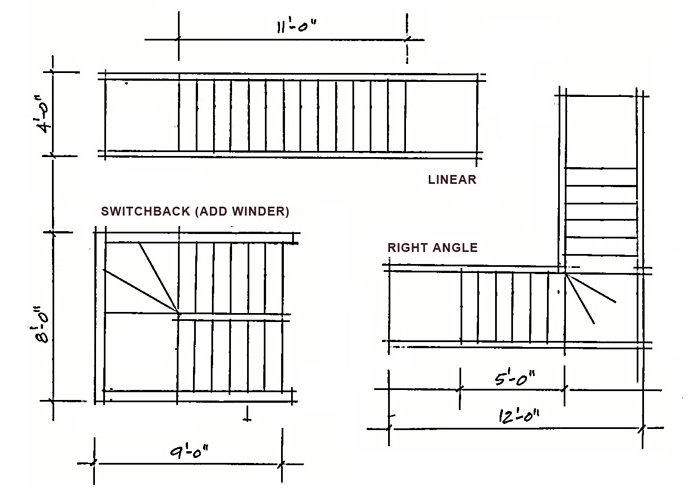
    Homes between 500 SF and 3000 SF will frequently encounter the most planning struggles centered around the stairs. The reason for this is that the stairs tend to dictate much of the circulation pattern in the floor plan, on both floors. With the stairs in the wrong place, it seems impossible to find a room plan that works well. A lot of space can be wasted and it is important to choose the right staircase pattern to opimize the circulation.

    A Linear stair case on a 9 foot climb extends about 11 feet, but it requires a landing which extends that to 14 feet. Then it requires a 14 foot hallway to walk from the top of one flight to the bottom of the next. This hallway could be wasted space unless your plan demands a linear stair for other reasons. So this 8ft x 14ft space uses 112 square feet.

    The Switchback stair case, which can include a winder, will only require a maximum of 84 square feet, saving 28 SF over the Linear stair. You still need the landings, but you don’t need the hallway. There are three walls to the switchback stair that can all be in rooms being useful. If you add the winder at the turn, the switchback will only require 76 SF. These are best used in very small homes when every inch counts.

    Sometimes a Right Angle staircase is the only best solution. It requires at least as much hallway area as a linear staircase, but it often helps open up other spacial opportunities in the design.
    Spiral Stairway
    .

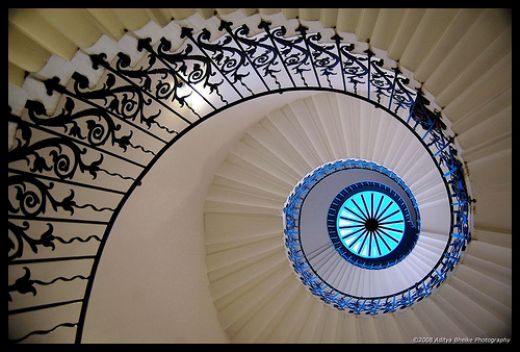
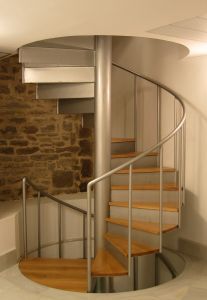
    A Spiral staircase is usually a grand and decorative stairway built on the site with extra craftsmanship. A spiral generally narrows as you climb while turning in a curve. A spiral staircase might get wider as you climb, or it might stay the same. Obviously, it resembles a spiral shape. Most people use the word “spiral” to refer to a Circular staircase which could also be called a helix, which is usually prefabricated in a metal shop and then shipped and installed on the site. A circular staircase would have a uniform radius from floor to floor. The national building codes only permit a metal, circular staircase to be a primary staircase if the treads are 36 inches wide and the railing ballasters are no greater than 4 inches apart.
    Circular Stairway
    .

    A good rule of thumb for adhering to most codes is to make the stair risers no higher than 7.75 inches, and the treads at least 10 inches deep, at least at the center of the tread, where most people walk. It has been determined that these dimensions agree with the way we walk when we climb stairs. However, if it is a commercial space, you will need risers under 7 inches and treads of 11 inches.
  • Solar Energy System; Grid Tie, Hybrid

    Solar Energy System; Grid Tie, Hybrid

    Solar Energy Grid Tied System
    Solar Energy Grid Tied System
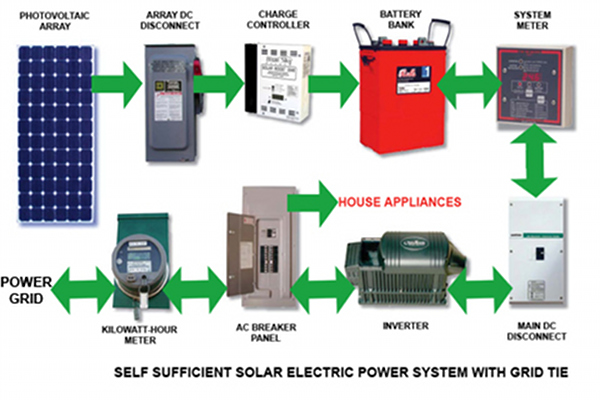
    A Grid Tied Solar Electric Power System is one that sends all the power to the electric company for credit. Another option is to build the same system with a battery storage array and keep the power in the house. Doing both is also an option. This diagram is the simplest way to illustrate the components of a system and how they are hooked together.

  • Energy Conservation for Efficiency

    Energy Conservation for Efficiency

    LED Light Bulb
    LED Light Bulb
    It is my opinion that the most cost efficient and practical clean energy puchase for you here in my region is to put a photovoltaic solar panel on the south roof, or an array on the yard pointing south, and wire the electricity back to the power company for credit. This is called a “grid-tied PV solar electric” system. It can heat the right house and power the right collection of appliances.

    However, before you even think about that, energy conservation is the best strategy that offers, by far, the greatest cost savings and positive environmental impact with the lightest investment. Conservation will ensure that you get the most for your money when purchasing a clean energy system. One cannot always accomodate for this entire checklist, but it is the best idea to try. We want a house to be highly energy efficient before installing a solar energy power system.

    Energy Conservation Strategy Checklist

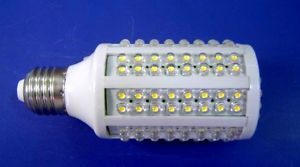
    • 400 to 800 lumen, LED light bulbs througout the house.
    • Low comsumption appliances approved by Energy-Star or better.
    • An exterior wall insulated to a continuous R-30 or better.
    • Roof and attic combined insulation of R-37 or better.
    • Insulate well around receptacles, doors, windows, and plumbing exits.
    • Insulation around rim joists and sometimes the ceiling of the basement.
    • Install an insulating blanket around your water heating tank and hot water pipes.
    • Do not exceed 10 or 12 percent of glass area to floor area in your house.
    • 75 percent of the glass should face the sun some time during the day.
    • Install 1 to 2 inch rigid foam on the exterior of the foundation wall.
    • Purchase the heating furnace with the highest efficiency rating.
    • Review the distribution of heat through the house, and modify for efficiency.
    • Install insulated cellular shades or curtains on windows and close them at night.
    • Always shut off all appliances and lights not in use.
    • If you are a little hot, take off some clothes and get over it.
    • If you are a little cold, wear a sweater or get some exercise.
    • When you can get along without an electrical appliance, don’t buy it.
    • Dishwashers are wasteful. Wash them yourself.